
NATS Blog
Bitnami Helm Charts will be deprecated by August 28th, 2025. Migrate to official NATS.io charts
Andrew Connolly
Important Notice for NATS.io Users on Bitnami Helm Charts
If you’re running NATS using Bitnami Helm charts, we strongly recommend migrating to the official NATS charts maintained by Synadia.
Why migrate now?
- Bitnami is deprecating the majority of it’s community tier helm charts, including NATS
- Legacy Bitnami images stop receiving updates on August 28th
- Future access to NATS via Bitnami will require a paid Bitnami Secure Images subscription
The solution:
Switch to the official NATS Helm charts, maintained by the team at Synadia
Client-side Partitioned Consumer Groups for JetStream
Jean-Noël Moyne
Just added to Orbit.go is the new client-side implementation of a frequently requested feature: ‘partitioned consumer groups’ for NATS JetStream!
This library is so named because what it implements is functionally equivalent to what Apache Kafka calls ‘consumer groups’ and how they implement partitioning, although the functionality is not unique to Kafka. It is purely implemented by the clients using the library but requires new server functionalities introduced with NATS server version 2.11. Note that there may be some new server functionalities introduced in post 2.11 versions that would push some of this functionality into the server and would make this library much smaller.
NATS Server 2.11 Release
Tomasz Pietrek
We are thrilled to announce that NATS Server 2.11 is finally here!
We want to extend a heartfelt thank you to everyone who contributed through discussions, issue reporting, code contributions, and testing early versions. ❤️
A Long Journey to 2.11
The 2.10.x series was our longest yet, having currently reached 26 patch releases. Throughout this extended period, our ongoing commitment to testing and quality assurance delivered excellent results, making 2.10.26 the most stable and reliable release to date.
NATS.io: The Secret Weapon Behind Vitrifi’s Workflow Automation Platform
Vitrifi
This is the first part of a two-part series explaining how Vitrifi leverages NATS.io to build its Workflow Automation Platform.
Some Background for Perspective
At Vitrifi, we embarked on building a Workflow Automation Platform after discovering that existing solutions couldn’t meet our specific requirements. Our vision was clear - we needed a platform that would:
- Be fully BPMN 2.0 compatible
- Provide an intuitive interface for visually designing and simulating workflows
- Maintain a minimal footprint for deployment flexibility
- Dynamically scale task workers based on workload
- Support multi-cloud deployments with high resilience and scalability
- Process thousands of workflow states per minute with real-time status updates
When existing open-source workflow solutions fell short, we took action. This led to the creation of Shar, an open-source workflow engine developed by Crystal Construct with Vitrifi’s support. Shar became the foundation for our Workflow Automation Platform.
Guest Post: Build Real-time Systems with NATS and Pathway
Shlok Srivastava & Sergey Kulik
Scalable Alternative to Apache Kafka and Flink for Advanced Streaming

While NORAD’s real-time tracking of Santa Claus’s sleigh across the globe is an annual tradition of the ultimate fleet manager, the NATS.io community is constantly challenging the boundaries of what is possible from a distributed scale perspective. Whether for creating interactive analytic dashboards for fleets of millions of sensors, to integrating plant floor data for predictive maintenance, or delivering latency sensitive AI workflows to edge devices, the topics discussed in this article are exactly the areas that distributed engineers and architects are trying to solve today.
Real-time analytics from Edge to multiple factories with NATS and i-flow
Jan Strehl
In the competitive landscape of the manufacturing industry (e.g., automotive), achieving efficient and scalable operations across multiple factory locations is critical. This case study examines the implementation of a real-time analytics solution using NATS and i-flow to overcome common challenges such as data silos, real-time processing requirements, scalability, and communication inefficiencies in OT/IT environments. The primary design goal was to seamlessly scale real-time analytics across various factory locations.
Challenge
There are several critical challenges that typically hinder operational efficiency and scalability through real-time analytics:
Delegate with trust
Vincent Vermersch
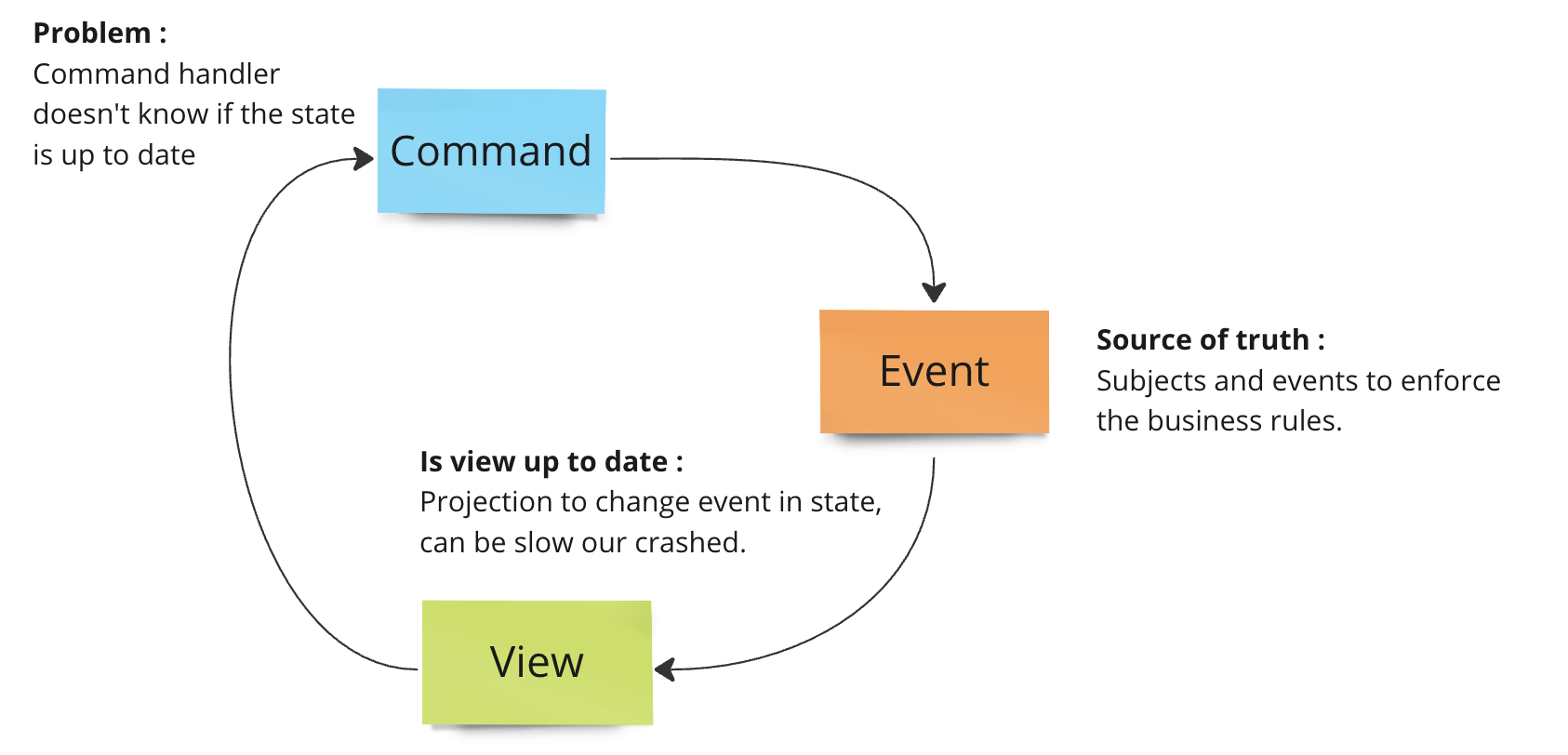
When speaking about async patterns (messaging, event sourcing, etc.) with other developers, they often seem afraid of eventual consistency. However, it is often expressed in the form of:
The frontend needs the answer directly
The business process needs to be validated with perfect data
My next page needs fresh data to display properly
With a messaging system, you have to wait for the message to be processed and the state to be updated. Then you can query it with trust. In the happy path, this could be something reasonable like 30ms, but it could be arbitrarily long if there is an interruption in the flow.
Nothin' but NATS - Building Natster
Kevin Hoffman
This is the first post in a new series where we explore patterns, practices, and samples of applications built using nothing but features available from NATS. We take a critical look at dependencies and frameworks and ask, “Do we really need the extra complexity?”. If we’re already using NATS, then what would it be like to use nothing but our NATS infrastructure for application development?
Introducing Natster
Natster is an open source reference application that illustrates how to build a secure media sharing platform that leverages core NATS primitives for things we might otherwise get from third party applications, platforms, or libraries.
Guest Post: Real-time IoT monitoring with NATS JetStream, RisingWave, and Superset
Fahad Shah
In the realm of IoT, real-time data processing presents specific challenges, including limited edge computing resources, network constraints, scalability considerations, and device diversity. Overcoming these obstacles requires the application of efficient edge computing techniques, robust security measures, standardized protocols, scalable management systems, and advanced data processing capabilities.
By combining the strengths of NATS JetStream, RisingWave, and Superset, a powerful solution emerges for the development of reliable and scalable real-time IoT applications. This solution leverages NATS JetStream’s efficient messaging capabilities, RisingWave’s secure and adaptable infrastructure, and Superset’s advanced data visualization and analytics features. Together, these tools create a cohesive ecosystem that empowers developers to confidently and efficiently address the complexities of real-time IoT data processing.
Introducing the NATS Execution Engine
Kevin Hoffman
As people continue to leverage their NATS infrastructure by increasing the number of apps and services that rely on NATS, we tend to see some common patterns emerge. People end up with two different views of their infrastructure: the NATS connectivity map and the cluster-style resource views that come from their workload scheduler(s).
With so many distributed applications, the infrastructure and connectivity is in place to support NATS and NATS-based applications, but is often underutilized. There’s so much more that NATS can enable.